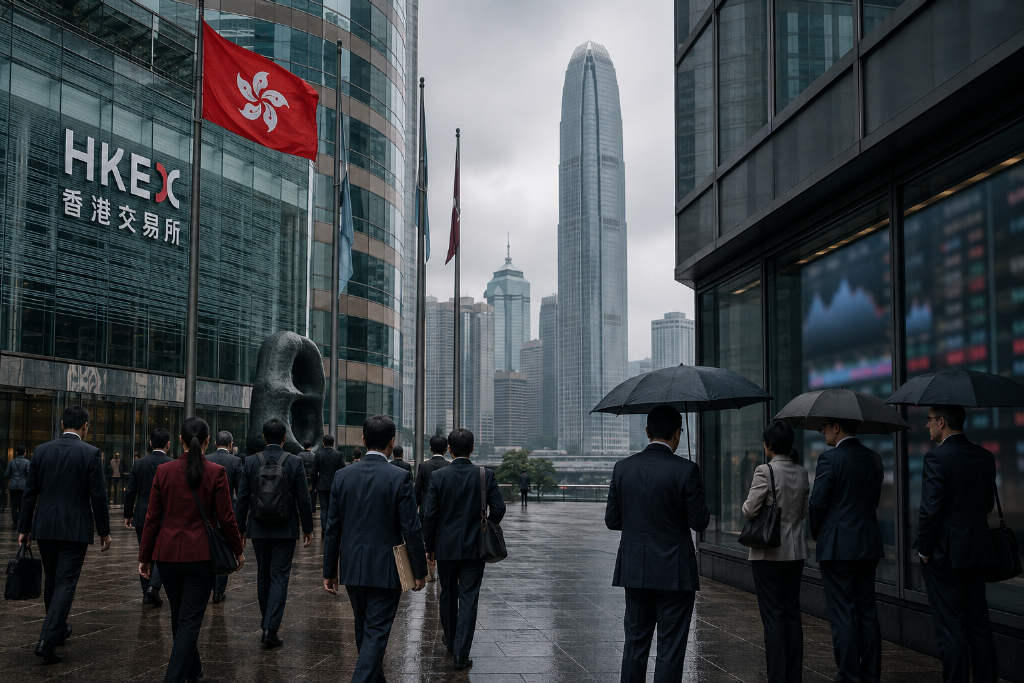
AI2026-10-23 06:34:39Where AI Profits Sit Is Driving the Valuation Gap Between Hong Kong and U.S. StocksThe long-running debate over why AI names in Hong Kong trade at lower multiples than their U.S. peers comes down to three variables in this Odaily analysis: where profits are captured along the value chain, whether hyperscaler capital spending is still expanding, and who sets marginal prices in each market. Nvidia, with FY27 Q1 revenue of $81.615 billion and net profit of $58.321 billion, is presented as the clearest example of pricing power during a period of compute scarcity. By contrast, Tencent, Alibaba and Kuaishou generate AI-related gains mainly through efficiency improvements inside broader platform businesses, leaving their margins and valuation multiples lower. The piece also argues that Microsoft’s jump in quarterly capex from $14.9 billion in FY25 Q1 to $35.8 billion in FY26 Q4 matters well beyond U.S. cloud names, feeding through to semiconductor suppliers, cloud operators and AI infrastructure demand in Hong Kong-listed companies. On the funding side, southbound capital has posted cumulative net buying of about HK$134 billion since July, even after a week of net selling in mid-October. With earnings season approaching, the article says investors should watch four numbers in particular: AI-related cloud revenue growth, the pace of capex relative to cloud revenue, AI penetration in advertising and e-commerce, and Kuaishou Kling’s ARR and revenue contribution.20
Hong Kong sto2026-09-07 01:03:05CICC says southbound money shows smarter timing in Hong Kong stocks, while active foreign inflows lagA WuBlockchain article republished a research note from CICC that examines which investor flows in Hong Kong equities act more like “smart money.” The report argues that Hong Kong’s offshore market structure makes it unusually sensitive to cross-market capital reallocation, creating a recurring seesaw effect against A-shares and other regional markets. Looking back to 2016, CICC says southbound funds are highly correlated with the market overall, yet they also show a contrarian edge: inflows tend to slow after strong rallies and pick up when Hong Kong stocks fall or underperform A-shares. Within southbound flows, insurers are described as the most stable long-term buyers, often adding on weakness, while actively managed mutual funds and ETFs tend to chase market direction more closely. By contrast, the note says active foreign funds usually add exposure only after market performance and earnings expectations improve, making them a lagging indicator by one to two quarters. Passive foreign flows, in CICC’s view, carry less signal because they are smaller and are often driven by subscriptions and redemptions in broader emerging-market products rather than dedicated China positioning. CICC adds that flow signals matter more when China’s credit cycle is choppy and overseas liquidity is tightening. In the current setup, it says southbound inflows have slowed over the past month while active foreign inflows have accelerated, pointing to a market with more structural opportunities than broad upside in the near term.1690